March 5, 2026
The Best Brush Types for Different Dog Breeds
Every dog owner knows that grooming is about more than just keeping your pup looking their best. Regular brushing removes dirt and loose hair, prevents painful mats, and distributes natural oils that keep their coat healthy and shiny. But here’s the thing: not all brushes work the same for every dog.
A Poodle’s curly coat needs completely different care than a Husky’s thick double coat or a Beagle’s short, smooth fur. Using the wrong brush can leave tangles behind, irritate your dog’s skin, or simply fail to do the job. That’s why understanding your dog’s specific coat type and matching it with the right grooming tools is essential.
At Gladiator K-Nine, we believe that proper grooming is a cornerstone of canine wellness. This guide will walk you through the main coat types, introduce you to the best dog brush types for each, and share pro tips to make grooming easier and more effective for both you and your four-legged friend.
Understanding Your Dog’s Coat Type
Before you can choose the right brush, you need to understand what type of coat your dog has. Dogs come with five main coat types, each with unique grooming needs:
- Short & Smooth Coats: These coats lie flat against the skin and are typically easy to maintain. Breeds like Beagles, Boxers, and Labrador Retrievers fall into this category.
- Double Coats: Double-coated dogs have a soft, dense undercoat beneath a longer topcoat. This includes breeds like Siberian Huskies, German Shepherds, and Golden Retrievers. These dogs shed heavily, especially during seasonal changes.
- Long & Silky Coats: Breeds such as Yorkshire Terriers, Maltese, and Shih Tzus have fine, flowing hair that tangles easily and requires frequent brushing.
- Curly & Wavy Coats: Poodles, Bichon Frises, and Portuguese Water Dogs have dense, curly fur that can mat quickly if not groomed regularly.
- Wiry Coats: Terriers, Schnauzers, and Irish Wolfhounds sport coarse, textured coats that need specialized grooming to prevent matting and maintain their distinctive look.
Knowing which category your dog falls into will help you select the most effective brushes for your dog and keep their coat in top condition.
Essential Brush Types for Every Dog
Now that you understand coat types, let’s explore the must-have dog brush types every owner should know about.
1. Rubber Curry Brush
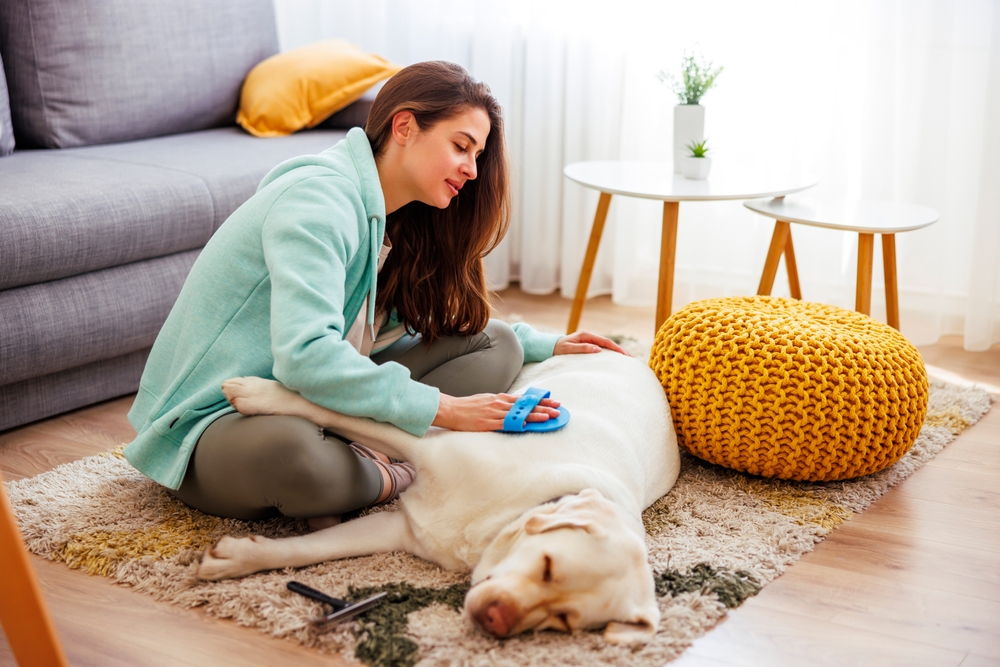
A rubber curry brush is perfect for dogs with short, smooth coats. The soft rubber bristles gently massage the skin while lifting loose hair and dirt. It’s also great for bathtime, as it helps work shampoo deep into the coat. Breeds like Boxers, Beagles, and Labradors benefit most from this tool.
2. Slicker Brush
Slicker brushes feature fine, short wires close together on a flat surface. They’re incredibly versatile and work well on curly, long, and even double coats. Slicker brushes excel at removing tangles, mats, and loose fur without damaging the coat. If you have a Poodle, Shih Tzu, or Golden Retriever, a slicker brush should be in your grooming kit.
3. Undercoat Rake
For double-coated breeds, an undercoat rake is essential. This tool has long, widely spaced teeth designed to penetrate through the topcoat and reach the dense undercoat beneath. It effectively removes dead hair and prevents matting. Huskies, German Shepherds, and other heavy shedders need regular sessions with an undercoat rake, especially during shedding season.
4. Pin Brush
Pin brushes have long, rounded metal pins that are gentle on long, silky coats. They help detangle hair and smooth out the coat without causing breakage. Yorkshire Terriers, Maltese, and Afghan Hounds all benefit from regular brushing with a pin brush.
5. Metal Comb
A metal comb is a finishing tool that every groomer needs. It’s perfect for working through stubborn tangles, checking for mats, and refining your dog’s coat after brushing. Metal combs come in different tooth spacings—use a wide-toothed comb for detangling and a fine-toothed comb for finishing touches.
6. Deshedding Tool
Deshedding tools, like the popular Furminator, are designed to reduce shedding by removing loose undercoat hair before it ends up all over your furniture. These tools work best on double-coated breeds and should be used carefully to avoid over-brushing, which can irritate the skin.
Grooming Tools for Every Breed
Matching the right brush to your dog’s breed makes grooming faster, easier, and more effective. Here’s a quick guide:
- Beagles, Boxers, and Labradors: Use a rubber curry brush or grooming glove to remove loose hair and massage the skin. These breeds have short coats that don’t require extensive grooming but benefit from regular brushing to reduce shedding.
- Siberian Huskies, German Shepherds, and Golden Retrievers: Invest in an undercoat rake and a deshedding tool. Brush at least twice a week, and daily during heavy shedding periods, to keep their thick double coats healthy.
- Poodles, Bichon Frises, and Portuguese Water Dogs: A slicker brush and metal comb are your best friends. Brush several times a week to prevent mats and keep curly coats looking their best.
- Yorkshire Terriers, Maltese, and Shih Tzus: Use a pin brush for daily brushing and a metal comb to work through tangles. Long, silky coats require consistent grooming to avoid painful mats.
- Terriers, Schnauzers, and Irish Wolfhounds: A slicker brush combined with a stripping comb helps maintain the wiry texture of these coats and prevents matting.
Pro Tips for Effective Brushing
Even with the right tools, technique matters. Here are some expert tips to make grooming more effective:
- Start Early: Get your dog used to brushing from a young age. This makes grooming sessions easier and more enjoyable for both of you.
- Work in Sections: For dogs with thick or long coats, brush in small sections. This ensures you don’t miss any tangles or mats.
- Be Gentle Around Sensitive Areas: Take extra care when brushing around the ears, belly, and legs. These areas are more sensitive and prone to matting.
- Handle Mats Carefully: If you encounter a mat, never pull it out forcefully. Use a metal comb or your fingers to gently work through the tangle. For severe mats, consider using a detangling spray or seeking help from a professional groomer.
- Brush Before Bathing: Always brush your dog before a bath. Mats can tighten when wet, making them even harder to remove.
- Establish a Routine: Regular brushing prevents mats and reduces shedding. Aim to brush short-coated breeds weekly and long or double-coated breeds several times a week.
Support Your Dog’s Recovery with Gladiator K-Nine
Grooming keeps your dog’s coat healthy, but overall wellness goes beyond the surface. At Gladiator K-Nine, we’re committed to supporting your dog’s long-term health and comfort. Our far infrared dog collar uses advanced technology to promote circulation, reduce inflammation, and support natural healing — perfect for active dogs or those recovering from injury.
Pair regular grooming with proactive wellness care to help your dog feel their best every day. Learn more about how our far infrared collar can boost your dog’s recovery and vitality at Gladiator K-Nine.
- Tags:
- dog breeds,
- dog brush,
- dog health,
- pet owners,
- types